
"Nevada LLC benefits" is a heavily marketed phrase, and the marketing tends to oversell. Nevada genuinely offers no state income tax, solid asset protection and some privacy — but it is also one of the more expensive states to keep an LLC in, and for most people, especially non-residents and online businesses, Wyoming delivers the same practical advantages for far less. This guide separates Nevada's real benefits from the hype and shows when Nevada actually makes sense. Written for US founders and non-residents choosing a formation state.
Northwest Registered Agent — privacy-first formation in Nevada, Wyoming or any state, with agent included.
The real benefits
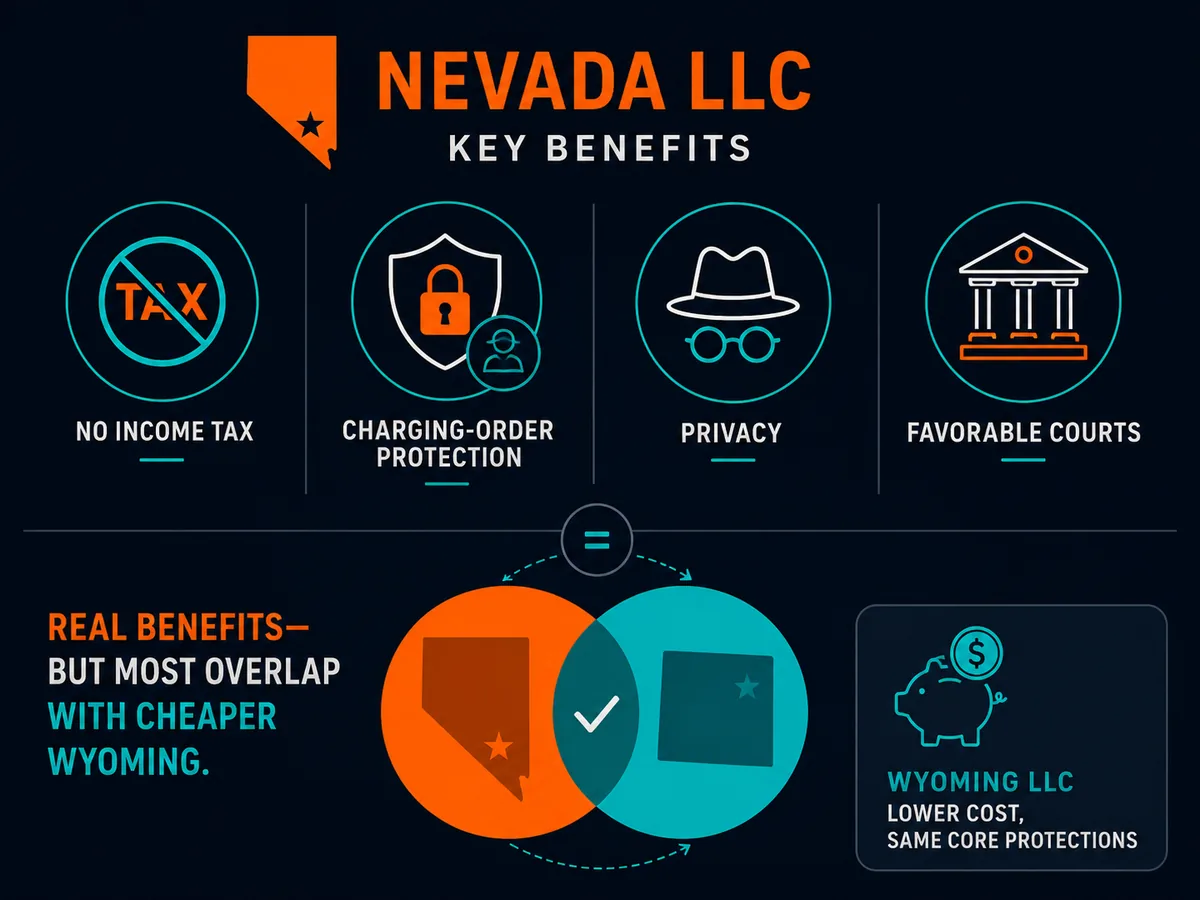
Nevada's advantages are genuine, just narrower than the marketing implies:
- No state income tax. Nevada levies no personal or corporate income tax — a real benefit for businesses and people actually based there. It is one of the states with no income tax.
- Strong asset protection. Nevada provides robust charging-order protection, which limits a creditor's remedy against a member's LLC interest. For single-member LLCs in particular, Nevada's statute is well regarded.
- Privacy. Nevada allows a degree of owner anonymity in public filings, similar to Wyoming.
- Business-friendly courts. Nevada has worked to build a predictable business-litigation environment.
- No IRS information-sharing agreement. Often cited, but of limited practical value — the IRS gets its information from your federal filings and banks regardless.
The catch: cost
Here is what the marketing skips. Nevada is one of the more expensive states to maintain an LLC. Beyond the initial filing, Nevada requires:
- an annual state business licence, and
- an annual list of managers/members,
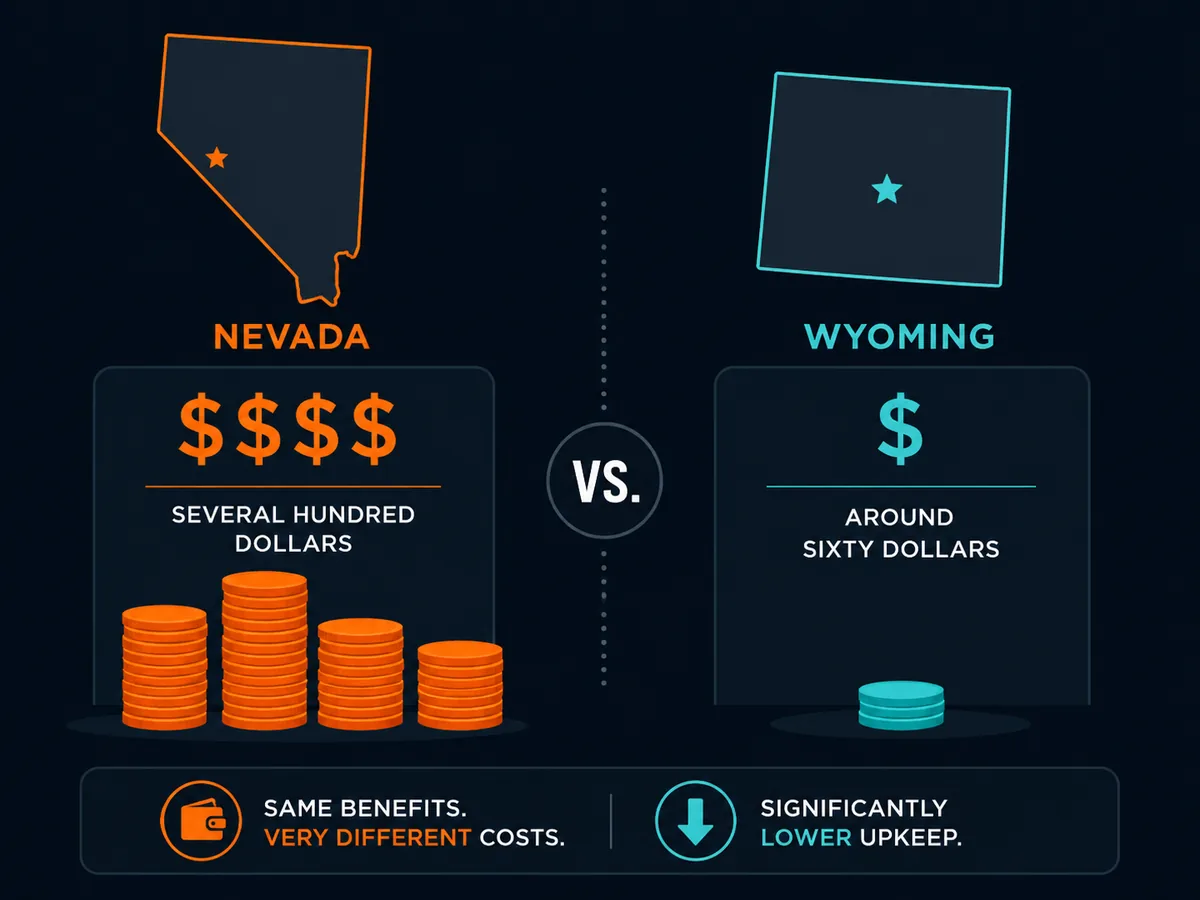
which together typically run a few hundred dollars every year — far above Wyoming's roughly $60 annual minimum. Add registered-agent service on top. Over several years, the Nevada premium is significant for benefits you can largely get elsewhere for less.
Nevada vs Wyoming
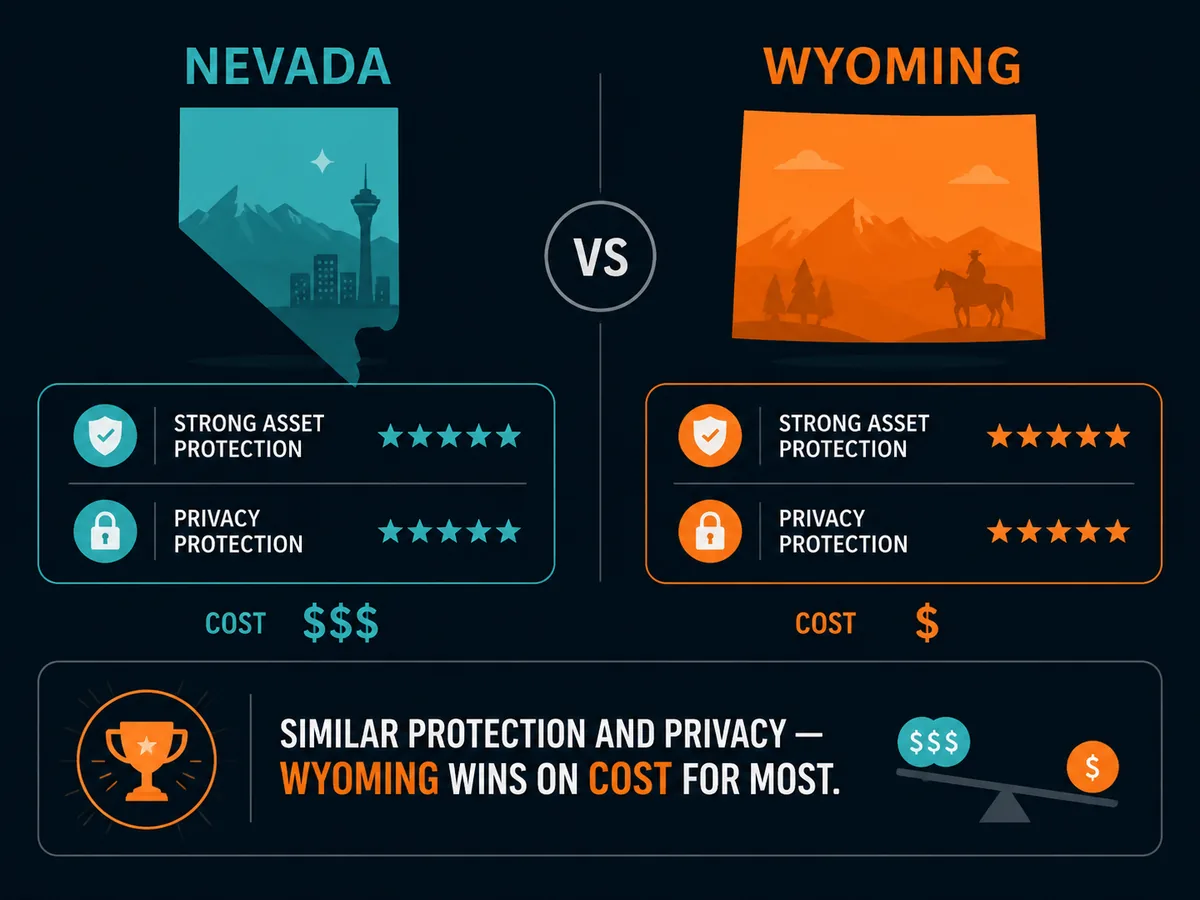
This is the comparison that matters, because the two are marketed as rivals:
- Asset protection: comparable. Both offer strong charging-order protection; Wyoming's single-member protection is well established.
- Privacy: comparable.
- State income tax: neither has one.
- Cost: Wyoming wins clearly — roughly $60/year minimum versus Nevada's several hundred.
For an online business or a non-resident with no physical Nevada presence, the rational default is Wyoming. Nevada earns its premium mainly if you actually operate in Nevada or specifically want its court system and statutory framework. See Wyoming LLC benefits and which state is best for a non-resident LLC for the full comparison, and Delaware if you may raise venture capital.
The out-of-state myth
Forming a Nevada LLC while living and working in another state does not avoid your home state's taxes. Your LLC has nexus where you operate, so you register it as a foreign LLC at home and pay that state's fees and taxes — you have added a second registration, not removed a tax. The no-income-tax benefit helps Nevada residents and Nevada-based operations, not someone filing from California or New York. This is the same trap covered in sole prop vs LLC and our no-income-tax states guide.
Doola forms your LLC in any state and handles the EIN and ongoing compliance.
When Nevada actually makes sense
- You live or operate in Nevada — then the no-income-tax benefit is real and there is no foreign-registration penalty.
- You specifically want Nevada's court system or statutory protections for a high-value asset-protection structure (with legal advice).
- Otherwise, Wyoming usually delivers the same practical benefits for much less.
Common mistakes
Paying Nevada's premium for benefits Wyoming gives cheaper. Unless you are in Nevada, the cost rarely justifies it.
Forming in Nevada to dodge home-state tax. Nexus follows where you operate; you will still owe at home.
Overvaluing the "no IRS sharing" claim. The IRS gets its data from your filings and banks regardless.
Forgetting non-resident filings. A Nevada single-member LLC owned by a non-resident still needs an EIN and an annual Form 5472.
When to consult a qualified professional
Get advice if you are building a serious asset-protection structure, operate across multiple states, or are a non-resident weighing Nevada against Wyoming. A business attorney can confirm whether Nevada's premium buys you anything your situation actually needs.
Soveraine is an editorial publication, not a law firm, and earns affiliate commissions from some providers mentioned. Read our affiliate disclosure, editorial policy and disclaimer before acting on anything in this article.