
If you are not a US citizen or resident and you want a US company — typically to bill US clients, run a Stripe account, or hold a SaaS business — the question of which state is the first real decision you will make. The honest answer is that for most non-residents the choice is between three states: Wyoming, Delaware, and New Mexico. The differences between them are smaller than the internet suggests, and the choice matters far less than getting your federal tax position right. This article walks through the actual trade-offs, by reader nationality, with the fees and filings that providers tend to gloss over.
Northwest Registered Agent — Privacy-first US LLC formation + registered agent
What this question is really asking
"Best state for a non-resident LLC" almost always means one of three things: cheapest to maintain, easiest to bank with, or most defensible if something goes wrong. It rarely means "lowest tax", because state-of-formation has very little to do with your US federal tax liability and nothing to do with your home-country tax liability.
A US LLC is a creature of state law but a pass-through for federal tax purposes by default. The IRS taxes the owner, not the entity. So your passport and residency drive the tax outcome; the state drives only the formation cost, the annual maintenance burden, the privacy of the public record, and — marginally — how seriously banks and payment processors take you.
Who this applies to — by nationality
The same Wyoming LLC produces three different tax outcomes depending on who owns it. Get this part wrong and the state choice is irrelevant.
US persons (citizens and green-card holders)
The United States taxes its citizens and permanent residents on worldwide income regardless of where they live or where their company is formed (IRS — US citizens and resident aliens abroad). A Wyoming LLC will not lower your federal tax bill. It may help you avoid state income tax if you have genuinely cut ties with a high-tax state like California or New York, but the bar for severing state residency is high and varies by state.
If you are a US person living abroad, your real tools are the Foreign Earned Income Exclusion (Form 2555), foreign tax credits (Form 1116), and tax treaties. The LLC is administrative scaffolding, not a tax strategy.
EU freelancers and digital nomads
If you are tax-resident in an EU member state, your US LLC's profits are generally taxable to you personally in your country of residence, because most EU jurisdictions treat a US single-member LLC as transparent or apply controlled foreign company (CFC) rules (OECD — CFC rules overview). Germany, France, Spain and Italy will all want their cut. Some countries (Portugal under certain regimes, Cyprus, Malta) treat US LLCs less aggressively, but you need local advice before assuming so.
You also need to watch for place of effective management rules: if you run the LLC from your kitchen in Berlin, German tax authorities can argue the LLC is German tax-resident regardless of where it was formed [source: TODO — link to German AO §10 on place of management].
Non-US, non-EU readers
This is the segment for whom the US LLC plays its advertised role. If you are tax-resident in a territorial-tax jurisdiction (UAE, Georgia, Paraguay, Malaysia for foreign-source income, Hong Kong for offshore-sourced income), and you genuinely run the business from there, a US LLC selling to non-US customers can be a clean, low-friction billing vehicle with no US federal tax and no home-country tax on the foreign-source profits.
This only works if (a) the LLC has no US effectively connected income, (b) you are not personally present in the US enough to create a permanent establishment, and (c) your home jurisdiction does not have aggressive CFC rules that pull the profits back to you.
Can non-residents legally form a US LLC
Yes, in any state. No state requires US citizenship or residency for LLC members or managers (US Small Business Administration — choose a business structure). You will need:
- A registered agent with a physical address in the formation state — typically $50–$150/year.
- An EIN from the IRS. Without an SSN or ITIN, you file Form SS-4 by fax or mail; the IRS will issue the EIN, but processing currently takes 4–8 weeks (IRS — apply for an EIN).
- A US business address — your registered agent's mail-forwarding service or a virtual office works for formation, though some banks want more.
- A bank or fintech account. Mercury, Wise Business and Relay are the realistic options for non-residents in 2026; traditional banks usually require an in-person visit.
The three states that matter
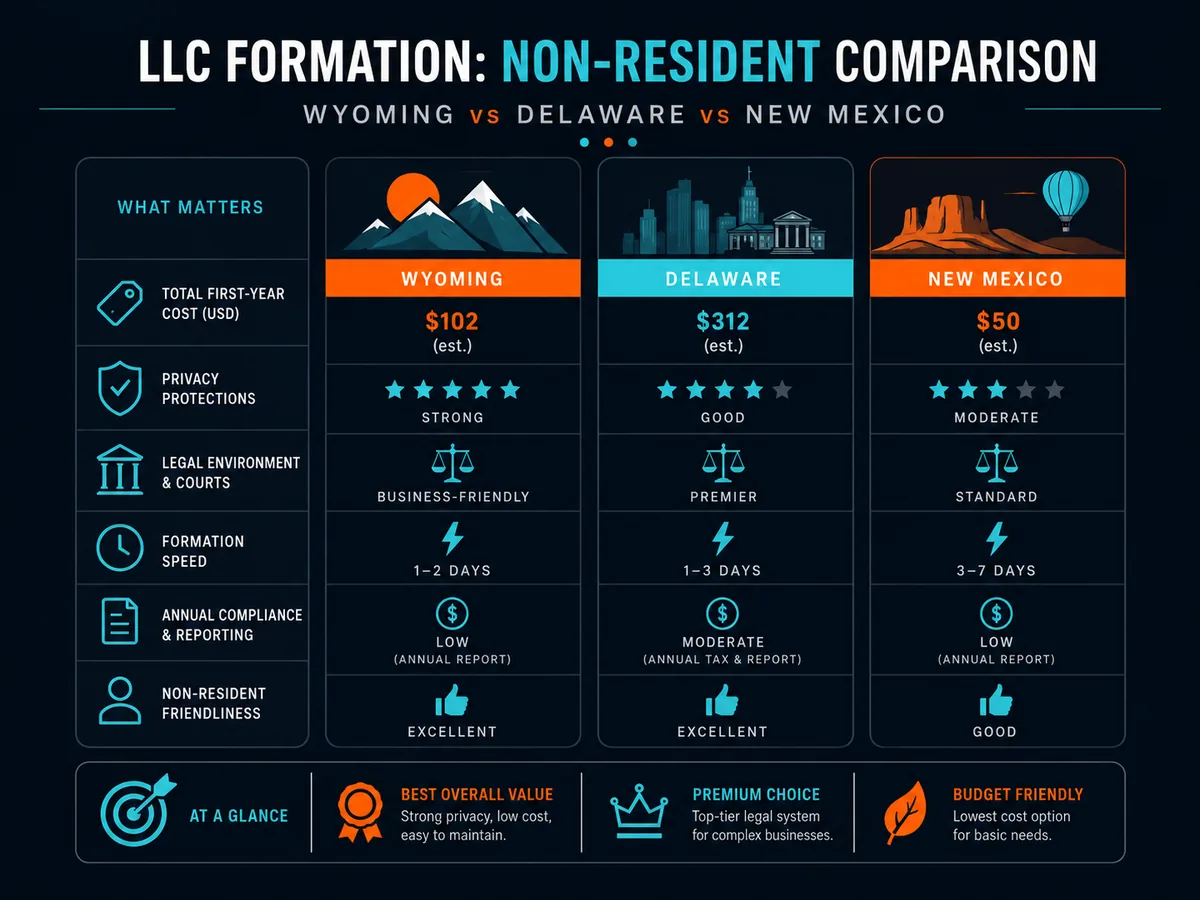
Most of the SERP debate collapses to Wyoming, Delaware and New Mexico. Here is how they actually compare.
Wyoming
The default recommendation for solo non-resident founders, and for good reason. Filing fee: $100. Annual report: $60 minimum (based on Wyoming assets, which for most non-resident service LLCs are negligible). No state income tax. Member and manager names are not required on the public filing — only the organiser's, who can be your registered agent (Wyoming Secretary of State — LLC filing).
Wyoming has the most developed registered-agent ecosystem aimed at non-residents, which means smoother filing, reliable mail forwarding, and providers who actually understand Form 5472. Banks and Stripe recognise it without raised eyebrows.
Delaware
The state corporate America incorporates in. Delaware's Court of Chancery — a specialist business court with 200 years of precedent — is the reason serious investors prefer Delaware entities. If you are building a startup that will raise from US VCs, you will end up in Delaware regardless of where you start.
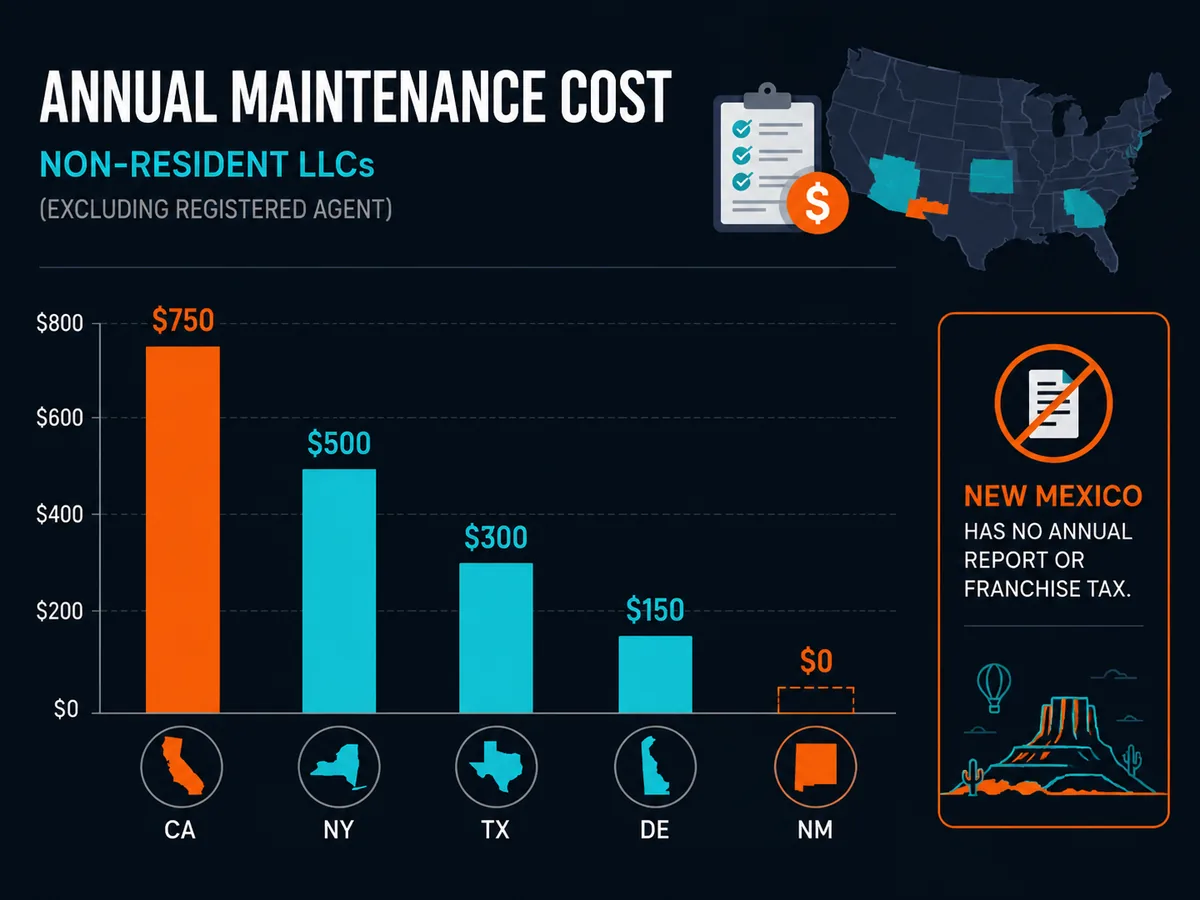
Filing fee: $110. Annual franchise tax: $300 flat for LLCs, due every June 1st (Delaware Division of Corporations — LLC fees). No state income tax on income not earned in Delaware. Member names are not on the public filing.
For a non-resident running a small online business, Delaware's franchise tax is pure overhead with no benefit. Choose it only if you have a specific reason — investors, partners, US clients who insist on it.
New Mexico
The cheapest defensible option. Filing fee: $50. No annual report. No franchise tax. Recurring cost is just your registered agent (New Mexico Secretary of State — business services). Member names are not required on the formation document.
The drawback is ecosystem maturity. Fewer registered agents specialise in non-resident clients, and some banks and payment processors are marginally less familiar. None of this is a hard blocker, but expect to do more of the explaining yourself.
Realistic costs and timeline
| State | Filing fee | Annual cost | Privacy on public filing | Time to file |
|---|---|---|---|---|
| Wyoming | $100 | $60 + RA ($100–150) | High — no members listed | 1–3 business days |
| Delaware | $110 | $300 + RA ($100–200) | High — no members listed | 1–10 business days |
| New Mexico | $50 | RA only ($50–150) | High — no members listed | 1–3 business days |
| Florida | $125 | $138.75 | Low — members public | 5–10 business days |
| Nevada | $425 (incl. business licence) | $350+ | Medium | 1 business day |
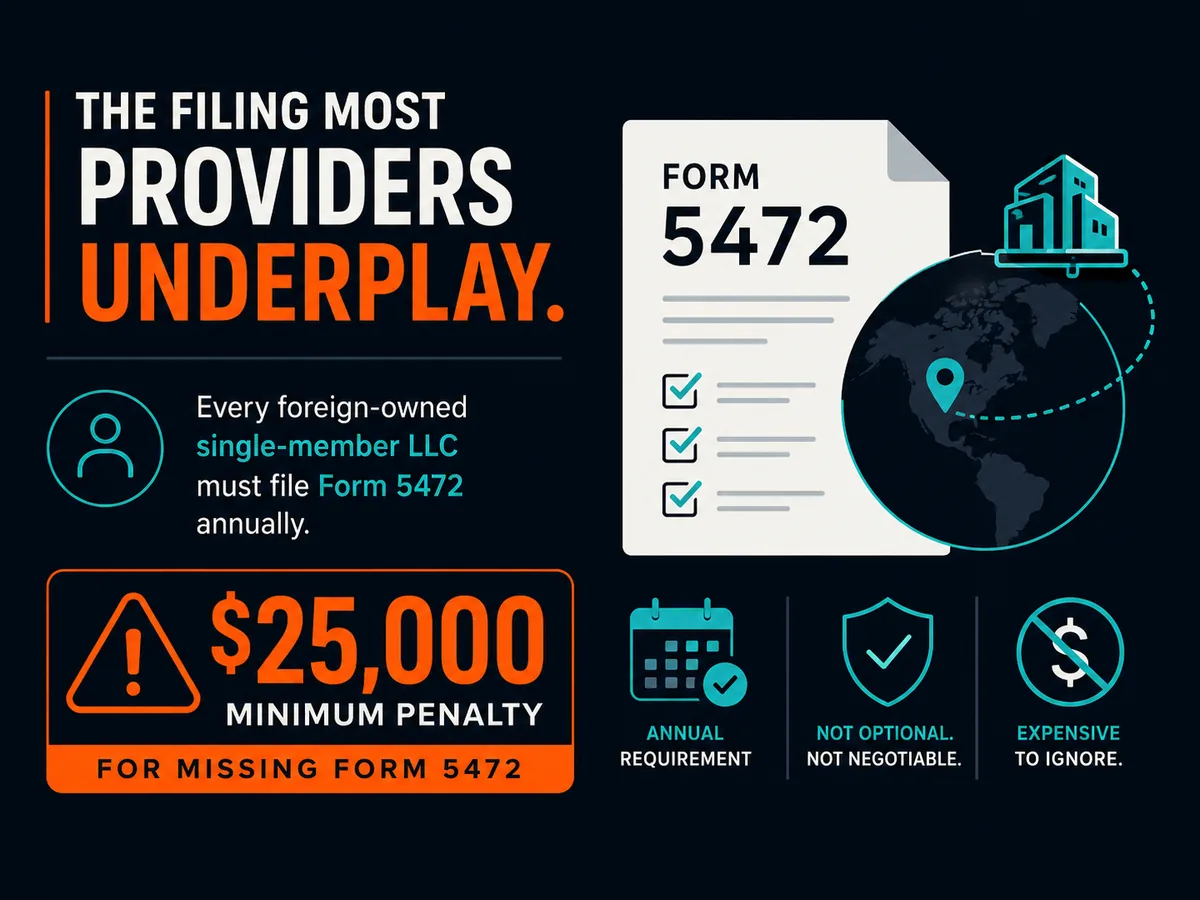
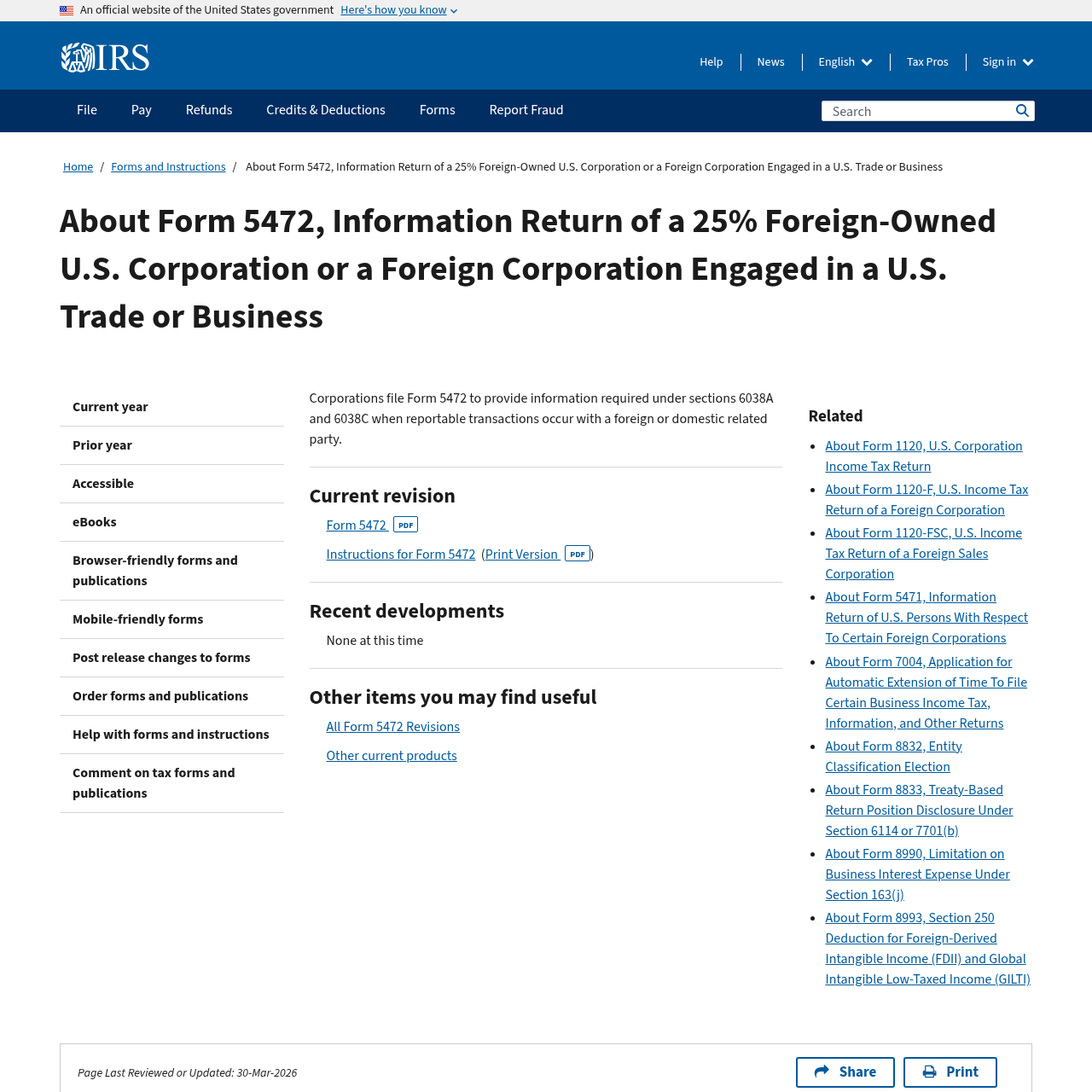
Add to all of these: EIN processing (4–8 weeks by fax for non-residents without SSN), bank account opening (1–4 weeks with Mercury or Wise), and Form 5472 + pro-forma 1120 filing each year (IRS — Form 5472 instructions). The 5472 is the one most providers underplay: $25,000 penalty for late or missing filings, and it applies to every foreign-owned single-member LLC.
Tax obligations non-resident LLC owners actually have
Forming the LLC is the easy part. The federal filing obligations are where most non-residents trip up.
Form 5472 + pro-forma 1120: Required annually for any foreign-owned US disregarded entity. Discloses transactions between the LLC and its foreign owner. Due April 15 (or June 15 with automatic extension for foreign filers). Penalty: $25,000 minimum.
Form 1040-NR: Required only if the LLC has US-source income that is effectively connected with a US trade or business (ECI), or if you personally have other US-source income. Service income earned by a non-resident performing the work outside the US is generally not ECI (IRS — Effectively Connected Income).
State filings: Even if you formed in Wyoming, if you have a US employee, a US office, or physical inventory in another state, you may have nexus there and owe that state's filings and taxes.
FBAR and FATCA: These are obligations of US persons, not foreign owners. If you are not a US person, you do not file these on your US LLC.
Common mistakes
Choosing the state your provider pushes hardest. Some incorporation services earn more on Wyoming, others on Delaware. Their recommendation is not neutral. Ask why.
Treating the LLC as a tax shelter. It is a billing and liability vehicle. Your tax outcome is driven by where you live and where the work is done, not the entity's birthplace.
Skipping Form 5472. A surprising number of non-residents file nothing in the LLC's second year. The penalty is automatic and brutal.
Using a residential address as the business address. Some registered agents allow this; banks increasingly do not. Use a real commercial mail-forwarding address.
Assuming your home country will ignore the LLC. CFC rules, place-of-effective-management rules, and transparent-entity rules vary by jurisdiction. Get local advice in your country of tax residence before you form.
When to consult a qualified professional
Before you form, you should have spoken to (a) a tax adviser in your country of tax residence who has seen US LLCs before, and (b) for anything beyond a simple solo service business, a US CPA familiar with non-resident filings. For US persons, that second adviser is non-negotiable.
The cost of this advice — typically $300–$800 for a one-off consultation — is materially lower than the cost of getting Form 5472 wrong, mis-classifying ECI, or discovering after the fact that your home country considers your LLC tax-resident there.
For background on how Soveraine assesses providers and editorial independence, see our editorial policy and affiliate disclosure.
FAQ
Which state is best for a non-resident LLC
For most non-resident solo founders selling digital services, Wyoming is the default answer: low filing fees, a $60 annual report, no state income tax, and a mature registered-agent ecosystem. Delaware makes more sense if you plan to raise venture capital or onboard institutional investors. New Mexico is the cheapest by a meaningful margin and uniquely requires no annual report. None of these states change your federal tax position — that depends on your passport, your residency, and where the work is actually performed.
Which state is tax free for an LLC
No US state is genuinely tax-free for an LLC. What people mean is that some states levy no state-level income tax on the LLC's profits. Wyoming, South Dakota, Nevada, Texas, Florida, Tennessee, Alaska, New Hampshire and Washington have no personal state income tax, which matters for pass-through LLCs. But federal tax still applies if the LLC has US-source effectively connected income, and the state where you actually do business can still claim nexus regardless of where you formed the entity.
Can a non-resident register an LLC in the USA
Yes. No US state requires LLC members or managers to be US citizens or residents. You can form an LLC in any of the fifty states with a foreign passport, a non-US address and no Social Security Number. You will need an EIN from the IRS (obtainable by fax or mail using Form SS-4 without an SSN), a registered agent in the formation state, and — for most banking and payment processors — proof of a legitimate business purpose.
Which state is the cheapest to open an LLC in
New Mexico is the cheapest over the lifetime of the entity. Formation costs $50 and there is no annual report or franchise tax — the only recurring cost is your registered agent (typically $50–$150/year). Wyoming costs $100 to form and $60/year minimum to maintain. Delaware costs $110 to form but charges a $300 franchise tax annually. Kentucky and Arkansas have low formation fees too but lack the privacy and ecosystem benefits non-residents typically want.
Does forming a US LLC create US tax filing obligations
Almost always, yes. A single-member LLC owned by a non-resident alien is treated as a disregarded entity and must file Form 5472 with a pro-forma 1120 each year — penalty for missing it is $25,000. Multi-member LLCs file Form 1065. Whether you owe US tax depends on whether the income is effectively connected with a US trade or business (ECI) and whether you have a US permanent establishment. Most non-resident service businesses with no US presence owe no US tax, but the filing is non-negotiable.
Do US citizens benefit from forming an LLC in Wyoming or Delaware if they live abroad
Less than the marketing suggests. US citizens are taxed on worldwide income regardless of where they live or where their LLC is formed. A Wyoming LLC does not reduce your US federal tax bill. It can simplify administration, offer some liability separation, and avoid state income tax if you have severed ties with a high-tax state like California. But it is not a tax-planning tool. Foreign Earned Income Exclusion and foreign tax credits are the real federal levers for US persons abroad.
Ready to act on this?
Northwest Registered Agent — Privacy-first US LLC formation + registered agent. Soveraine readers go to the front of the line through our partner link, and you fund independent editorial in the process.
Sources
- IRS — US Citizens and Resident Aliens Abroad: https://www.irs.gov/individuals/international-taxpayers/us-citizens-and-resident-aliens-abroad
- IRS — Apply for an Employer Identification Number (EIN): https://www.irs.gov/businesses/small-businesses-self-employed/apply-for-an-employer-identification-number-ein-online
- IRS — About Form 5472: https://www.irs.gov/forms-pubs/about-form-5472
- IRS — Effectively Connected Income (ECI): https://www.irs.gov/individuals/international-taxpayers/effectively-connected-income-eci
- US Small Business Administration — Choose a Business Structure: https://www.sba.gov/business-guide/launch-your-business/choose-business-structure
- Wyoming Secretary of State — LLC Filing: https://sos.wyo.gov/Business/LLC.aspx
- Delaware Division of Corporations — Annual Franchise Tax and LLC Fees: https://corp.delaware.gov/paytaxes/
- New Mexico Secretary of State — Business Services: https://www.sos.nm.gov/business-services/
- OECD — BEPS Action 3 (Controlled Foreign Company Rules): https://www.oecd.org/tax/beps/beps-actions/action3/