
Mexico is one of the most accessible second citizenships for North Americans, and "Mexican dual citizenship" draws steady search interest from US citizens who already spend time there, own property, or have Mexican family. The good news: both Mexico and the United States permit dual nationality, so you do not have to choose. This guide covers the realistic routes — descent and naturalisation — the property advantage that motivates many applicants, and the tax reality that a second passport does not change your US obligations. Written primarily for US citizens.
Bright!Tax — keeps your US filing correct while you live in Mexico (FEIE, FBAR, FATCA).
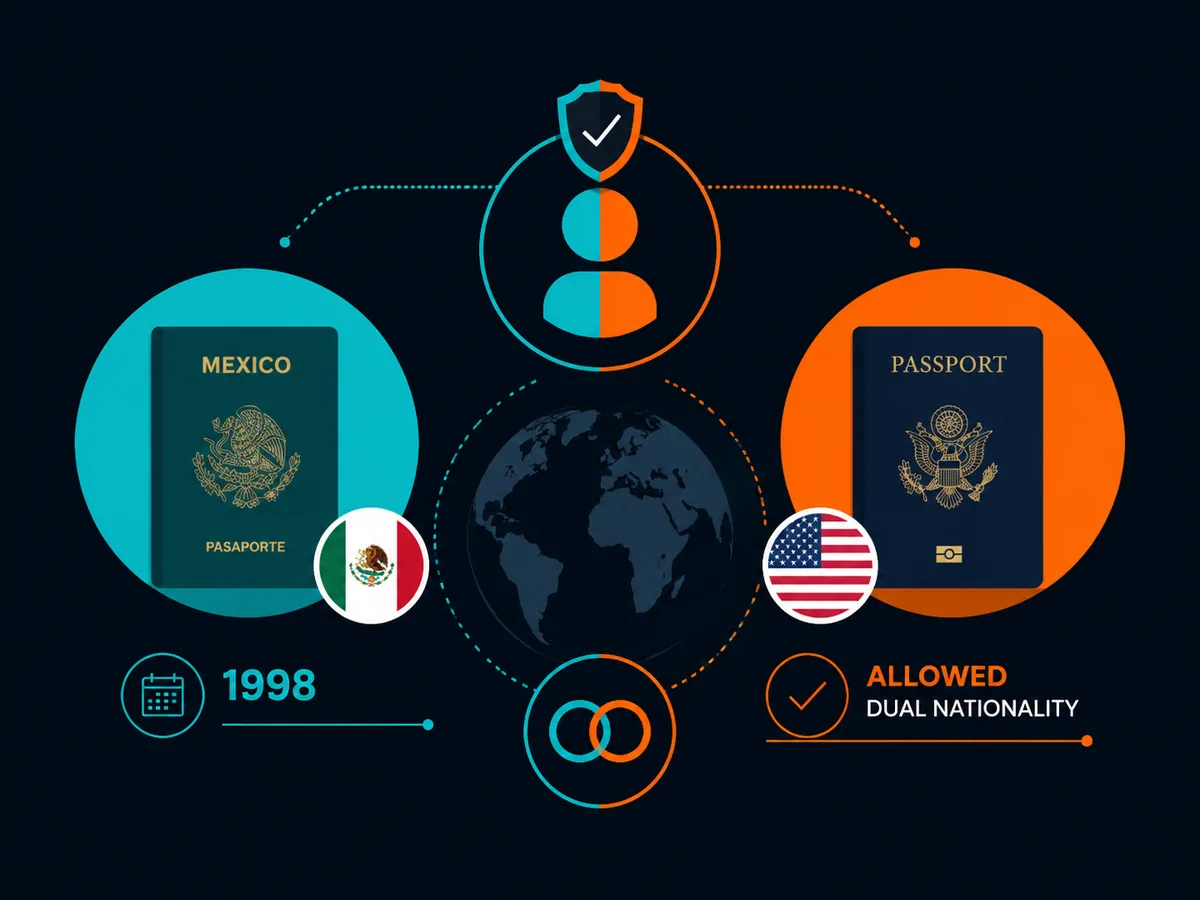
Both countries say yes
Mexico has allowed dual nationality since 1998, when a constitutional reform took effect specifically so that Mexicans abroad — and their children — would not have to renounce Mexican nationality to naturalise elsewhere. Mexican-born citizens cannot be stripped of their nationality for acquiring another.
On the US side, as covered in our guide to dual citizenship in the United States, the US permits its citizens to hold a second nationality. So US–Mexican dual citizenship is recognised by both governments, and millions of people hold it.
The routes to Mexican citizenship
By descent. If you have a Mexican-born parent — and in some cases a grandparent — you may claim Mexican nationality by registering your birth with a Mexican consulate. This is the fastest route for those eligible, because it does not require living in Mexico.
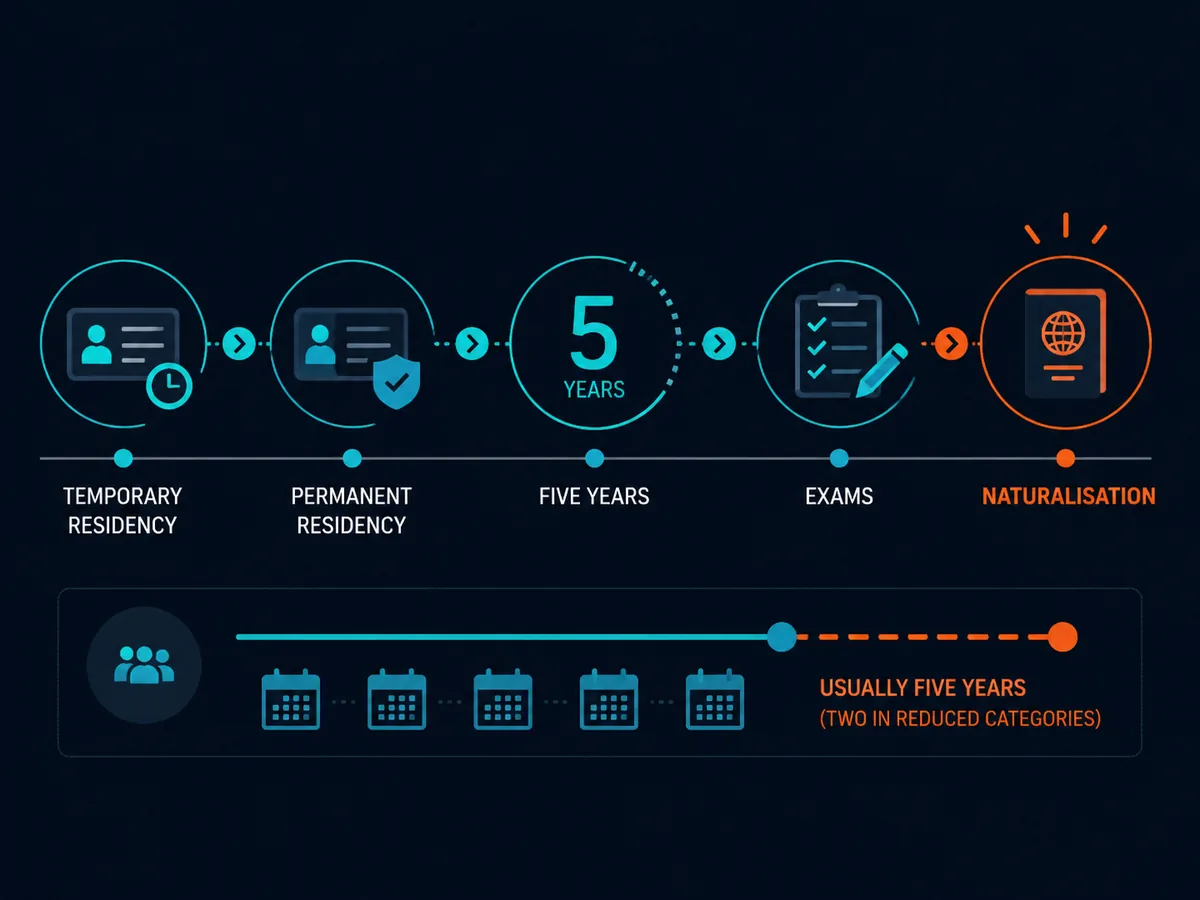
By naturalisation. For everyone else, the path runs through residency:
- Obtain Mexican temporary residency (see our Mexico temporary resident visa guide), then permanent residency.
- Accumulate five years of legal residency — reduced to two years if you are married to a Mexican citizen, have Mexican children, or are a national of a Latin American or Iberian country.
- Apply to the Secretaría de Relaciones Exteriores (SRE), pass a basic Spanish assessment and a Mexican history and culture exam, and attend an interview.
The exams are not trivial but are manageable with preparation. The long pole is always the residency you must hold first.
Why people want it: property and permanence
The single biggest practical motivator is property. Foreigners buying a home within roughly 50 km of the coast or 100 km of a border — the "restricted zone" that covers most desirable beach areas — must hold it through a bank trust (fideicomiso) or a Mexican corporation. A Mexican citizen buys in their own name, with no trust and no annual trust fee.
Beyond property, citizenship removes the residency-renewal treadmill, grants the vote, and provides a Mexican passport. For US citizens already living in Mexico on residency, naturalisation is the natural endpoint.
The tax reality
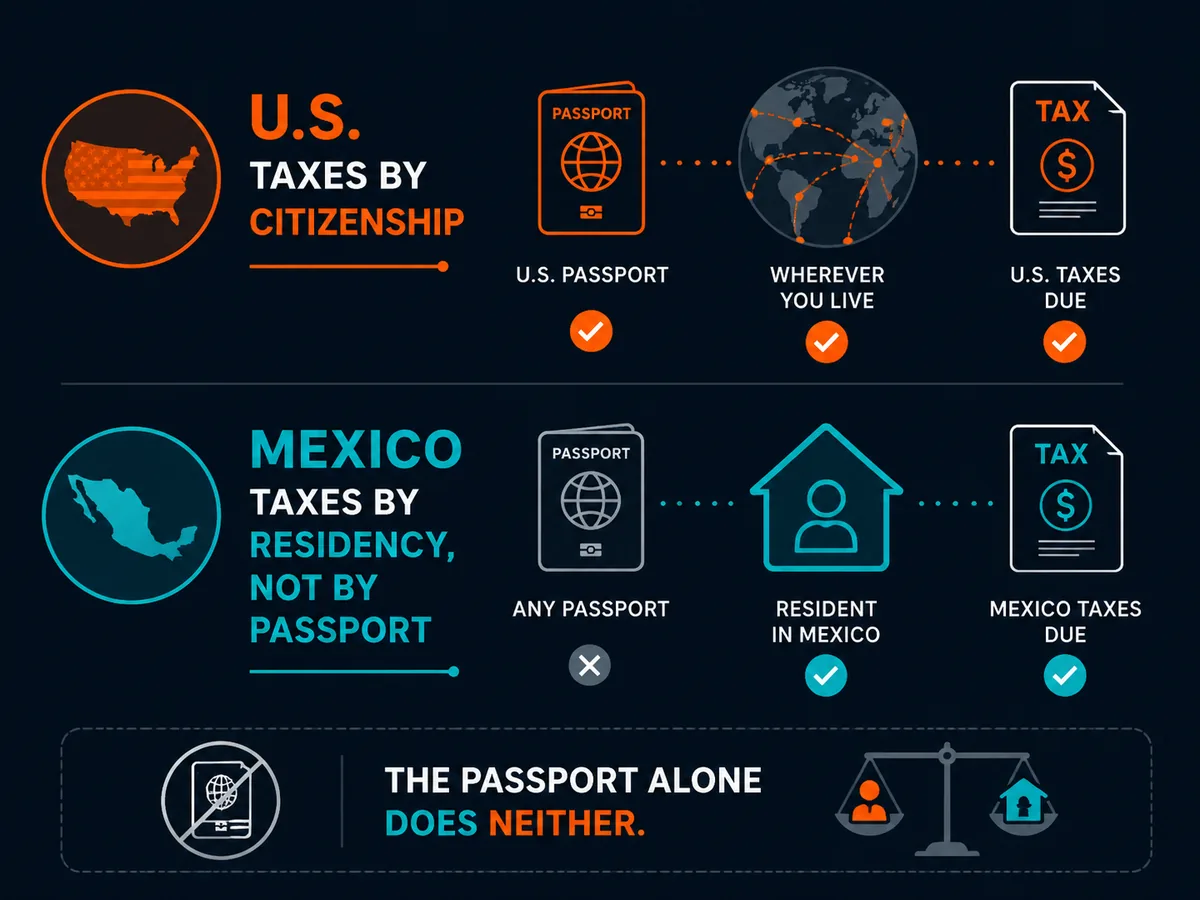
A Mexican passport does not change your US tax position. The US taxes citizens on worldwide income for life, so a US–Mexican dual citizen still files a US return and reports foreign accounts via FBAR and FATCA, using the Foreign Earned Income Exclusion or Foreign Tax Credit to avoid double tax.
On the Mexican side, tax is driven by residency, not citizenship. Mexico taxes its tax residents on worldwide income — but you become a Mexican tax resident by establishing your home and centre of vital interests there, not merely by holding the passport. A US citizen who naturalises but keeps their life in the US does not automatically become a Mexican taxpayer; someone who actually lives in Mexico does. The US–Mexico tax treaty and foreign tax credits generally prevent the same income being taxed twice.
MyExpatTaxes — software-led US expat tax filing for Americans abroad.
Common mistakes
Assuming citizenship changes US tax. It does not — only renunciation does, and that has its own exit-tax cost.
Confusing citizenship with tax residency in Mexico. Living there creates Mexican tax residency; the passport alone does not.
Expecting naturalisation to be quick. The exams are fast; accumulating the residency first is the multi-year part.
Not registering children early. Nationality by descent has generational and timing limits — register births promptly.
When to consult a qualified professional
Get advice if you will live in Mexico (Mexican tax residency planning), own or plan to buy Mexican property, or need your US filing handled while abroad. An immigration lawyer can manage the SRE naturalisation process and a cross-border accountant can keep both tax systems aligned.
Soveraine is an editorial publication, not a law or tax firm. Read our editorial policy and disclaimer before acting on anything in this article.