
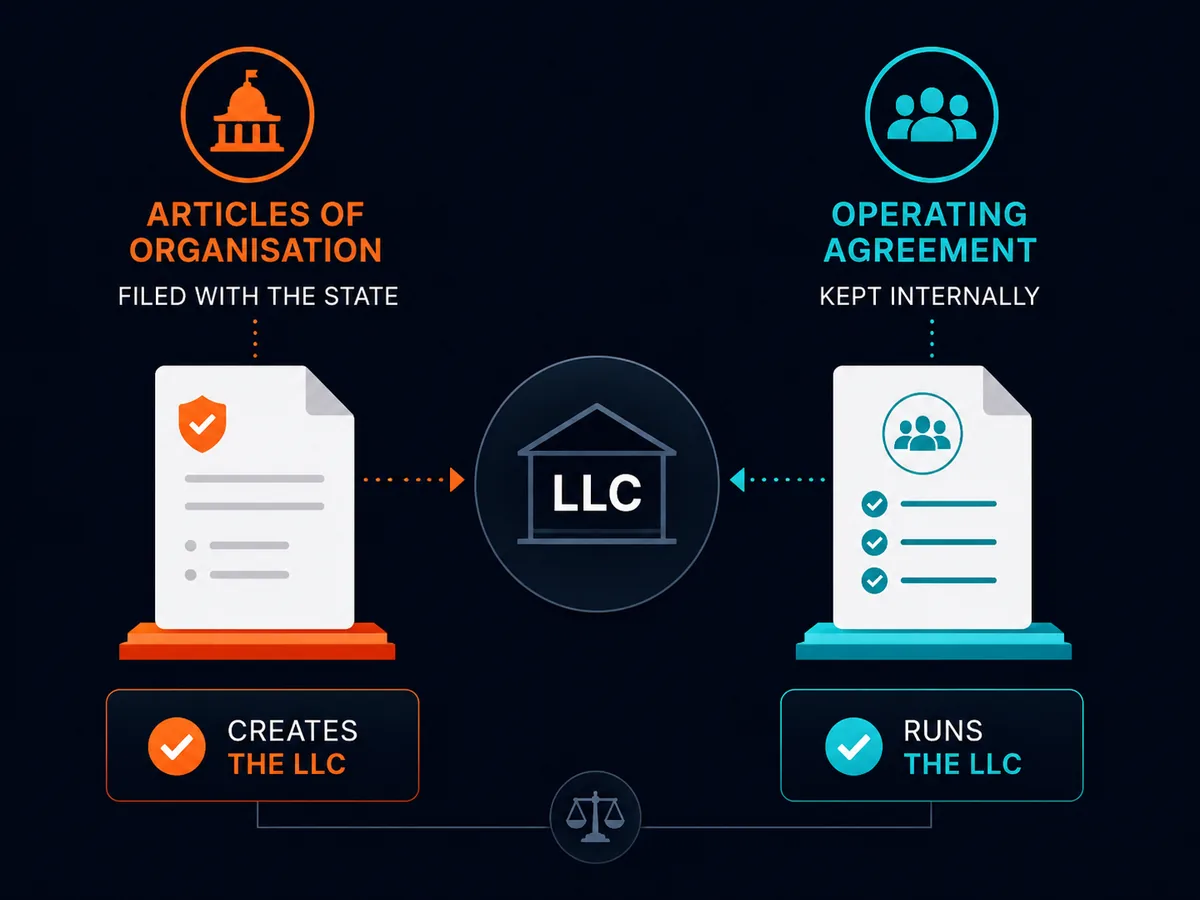
The operating agreement is the most important LLC document that the state never sees. It is not what creates your company — that is the articles of organisation — but it is what governs how the company actually runs, and the gap between "we filed an LLC" and "we have a real, well-run LLC" is exactly this document. This guide explains what an operating agreement is, why even a one-person LLC needs one, and the specific clauses every agreement should contain. Written for US LLC owners, including non-residents who form a US LLC.
Northwest Registered Agent — LLC formation that includes a free operating-agreement template and registered agent.
What an operating agreement actually is
An LLC operating agreement is the internal contract among the owners (called members) of a limited liability company. It sets out ownership, management, money and exits. Three things distinguish it from the other LLC paperwork:
- It is not usually filed with the state — it is kept privately in your company records.
- It governs the real operation of the company, overriding the state's one-size default rules.
- It is the document banks, lenders and investors ask to see to confirm who controls the company.
Think of the articles of organisation as your LLC's birth certificate and the operating agreement as its rulebook.
Why even a single-member LLC needs one
It is tempting to skip the agreement when you are the only owner. Don't. For a single-member LLC the operating agreement does three useful things:
- Reinforces the liability shield. A documented agreement is evidence that the LLC is a genuine, separate entity — part of what stops a court "piercing the veil" and reaching your personal assets.
- Satisfies the bank. Many US banks ask for an operating agreement before opening a business account, including for non-resident-owned LLCs.
- Overrides unhelpful defaults. It lets you set your own rules for succession, management and dissolution rather than accept the state's.
A single-member agreement is short — often a few pages — but it should exist and be signed.
What to include — the core clauses
Every operating agreement, single- or multi-member, should cover:
- The members and their ownership percentages — who owns what.
- Capital contributions — what each member put in (cash, property, services) and what happens if more is needed.
- Management structure — member-managed (owners run it) or manager-managed (a designated manager runs it).
- Voting rights — how decisions are made and what supermajorities apply to big decisions.
- Profit and loss allocation and distributions — how money is split and when it is paid out (this need not match ownership percentages, but say so explicitly).
- Transfer and buy-sell provisions — what happens if a member wants to sell, dies, becomes disabled, or is bought out.
- Dissolution — how the company is wound up and assets distributed.
- Amendment procedure — how the agreement itself can be changed.
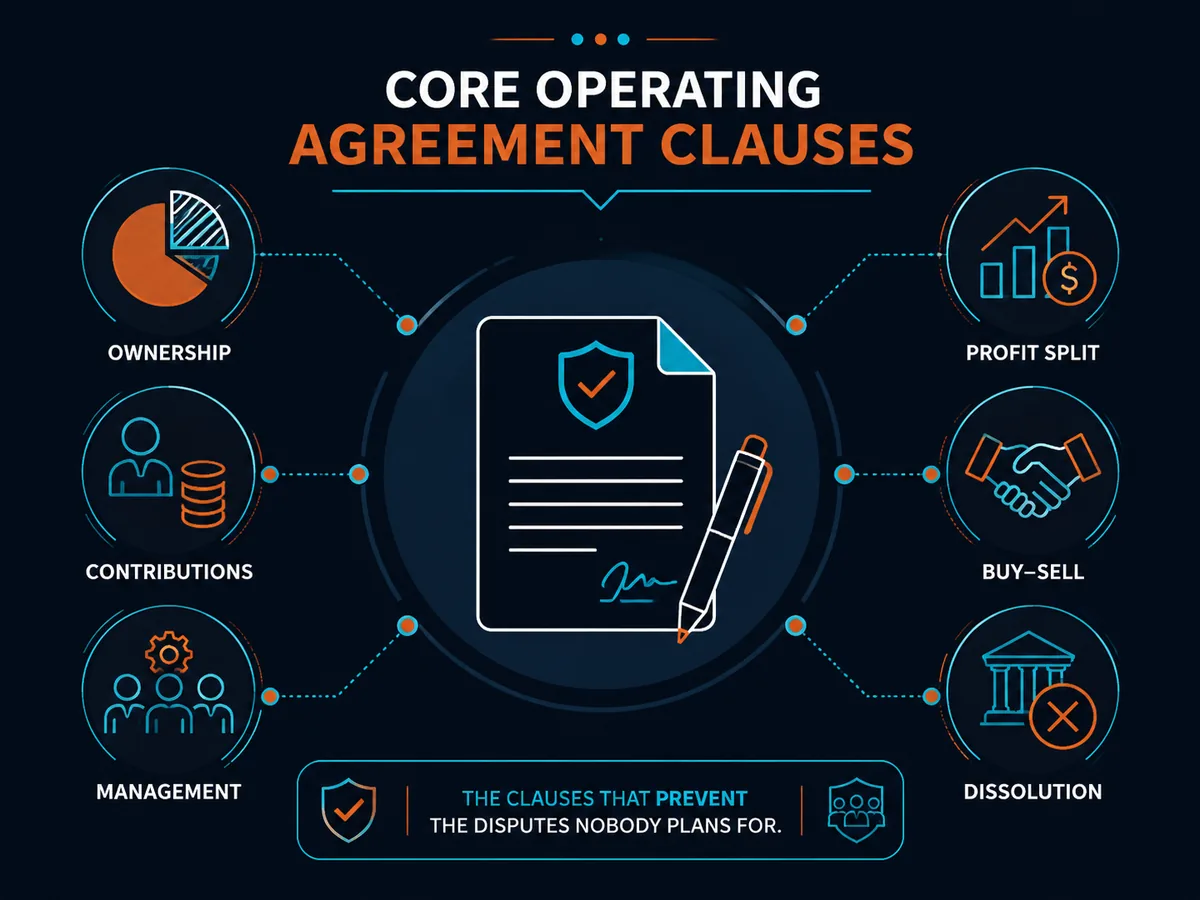
The buy-sell and exit clauses are the ones people skip and later regret. A partnership that splits up without a pre-agreed buy-out mechanism is where most LLC disputes turn ugly and expensive.
Template vs lawyer
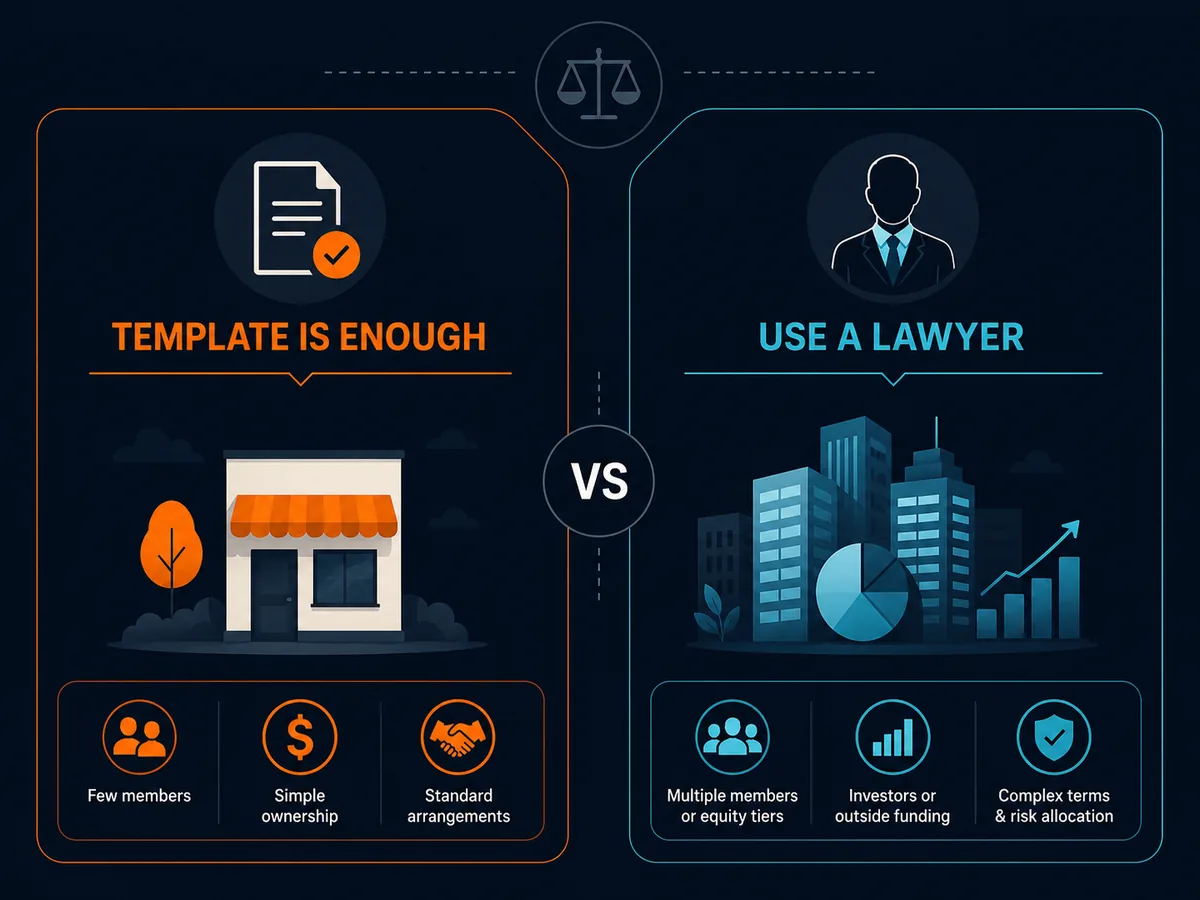
- A template is fine for a single-member LLC or a simple multi-member LLC with equal partners and ordinary terms. Most reputable formation services — including Northwest and Doola — include a usable template.
- Use a lawyer when there is unequal ownership, outside investment, special profit allocations, vesting schedules, or anything where a future dispute could be costly. The fee is small next to the cost of an ambiguous buy-out clause.
Doola bundles formation, EIN and an operating-agreement template — handy for non-resident founders.
Common mistakes
No agreement at all. The LLC then runs on the state's defaults, which rarely match what the owners wanted — see sole prop vs LLC for why the structure matters.
Copying a template without reading it. Generic templates often allocate profits equally and omit buy-sell terms. Adapt it to your facts.
Never signing it. An unsigned agreement is weak evidence. Sign, date and keep a copy with your records.
Letting it go stale. Update the agreement when ownership, management or contributions change.
When to consult a qualified professional
Have an attorney draft or review your operating agreement if you have outside investors, unequal owners, special allocations, vesting, or significant assets at stake. For a simple single-member or equal-partner LLC, a quality template is usually sufficient.
Soveraine is an editorial publication, not a law firm. Read our editorial policy and disclaimer before acting on anything in this article.